
You’ll learn:
Why stepping back at home can feel emotionally uncomfortable — even when your family is capable
The hidden guilt and conditioning that pulls mums back into managing everything again
- What actually happens when you stop rescuing every messy moment (and why that’s where shared responsibility begins)

There’s a moment that happens when you begin stepping back at home.
You pause before answering a question.
You leave something for someone else to figure out.
You hold back from reminding, fixing, organising, or smoothing something over straight away.
And instead of feeling lighter…
You feel uncomfortable.
Not because everyone else isn’t capable.
But because something inside you suddenly feels a bit… off.
For a lot of mums, this is the part nobody talks about.
The emotional side of shared responsibility.
Because even when you want your family contributing more…
Even when you know you can’t keep carrying the whole Motherload forever…
Actually stepping back can feel surprisingly hard.
Not just practically.
Emotionally.
Because when you’ve spent years being:
- the organiser
- the rememberer
- the Household Google
- the one quietly keeping everything running
…it stops feeling like just something you do.
It starts feeling like who you are.
And that’s why so many mums end up stepping back in.
Not because their partner or kids aren’t capable.
But because guilt, discomfort, and the feeling of “I’ve dropped the ball” pull them right back into over-functioning.
This blog is for you if:
- stepping back feels harder than you expected
- things feel messy unless you manage them
- guilt creeps in the moment others struggle
- or making life easier for everyone else feels like your responsibility
Because the shift from “doing it all” to shared responsibility isn’t just practical.
It’s deeply emotional too.
And understanding that changes everything.
Why Shared Responsibility Feels So Hard
For a lot of mums, the hardest part of shared responsibility isn’t actually getting other people involved.
It’s resisting the urge to step back in.
Because when you’ve spent years being the one who:
- notices
- remembers
- anticipates
- and quietly keeps everything moving…
Your brain starts treating that role like a responsibility, not a choice.
And over time, that responsibility gets tangled up with identity.
Being caring.
Being reliable.
Being a “good mum.”
So when something gets forgotten…
Or someone struggles…
Or things feel messy or inefficient…
It doesn’t just feel inconvenient.
It feels personal.
Like you should’ve prevented it somehow.
That’s why stepping back can create so much internal tension.
Not because your family isn’t capable.
But because you’ve been conditioned to believe that making life easier for everyone else is your job.
Even when it comes at your own expense.
And the tricky part?
The more capable and organised you are…
The easier it becomes for everyone to keep relying on you.
Not because they’re unwilling.
But because the system has quietly formed around you always catching things before they fall.
This is why shared responsibility can feel so emotionally uncomfortable at first.
You’re not just changing who does what.
You’re changing:
- who notices
- who remembers
- who carries the responsibility
- and who gets to let things feel uncomfortable for a little while
And that’s a much deeper shift.
Which part feels most familiar for you right now?
As you read this, notice what’s coming up for you most often lately:
- stepping back feels uncomfortable
- guilt pulls you back in
- things feel messy unless you manage them
- making life easier for everyone feels like your responsibility
If you’re nodding along to more than one…
you’re not failing at shared responsibility.
You’re in the middle of unlearning years of conditioning around what it means to be a “good mum.”
The Moment Most Mums Step Back In
This is usually the moment it happens.
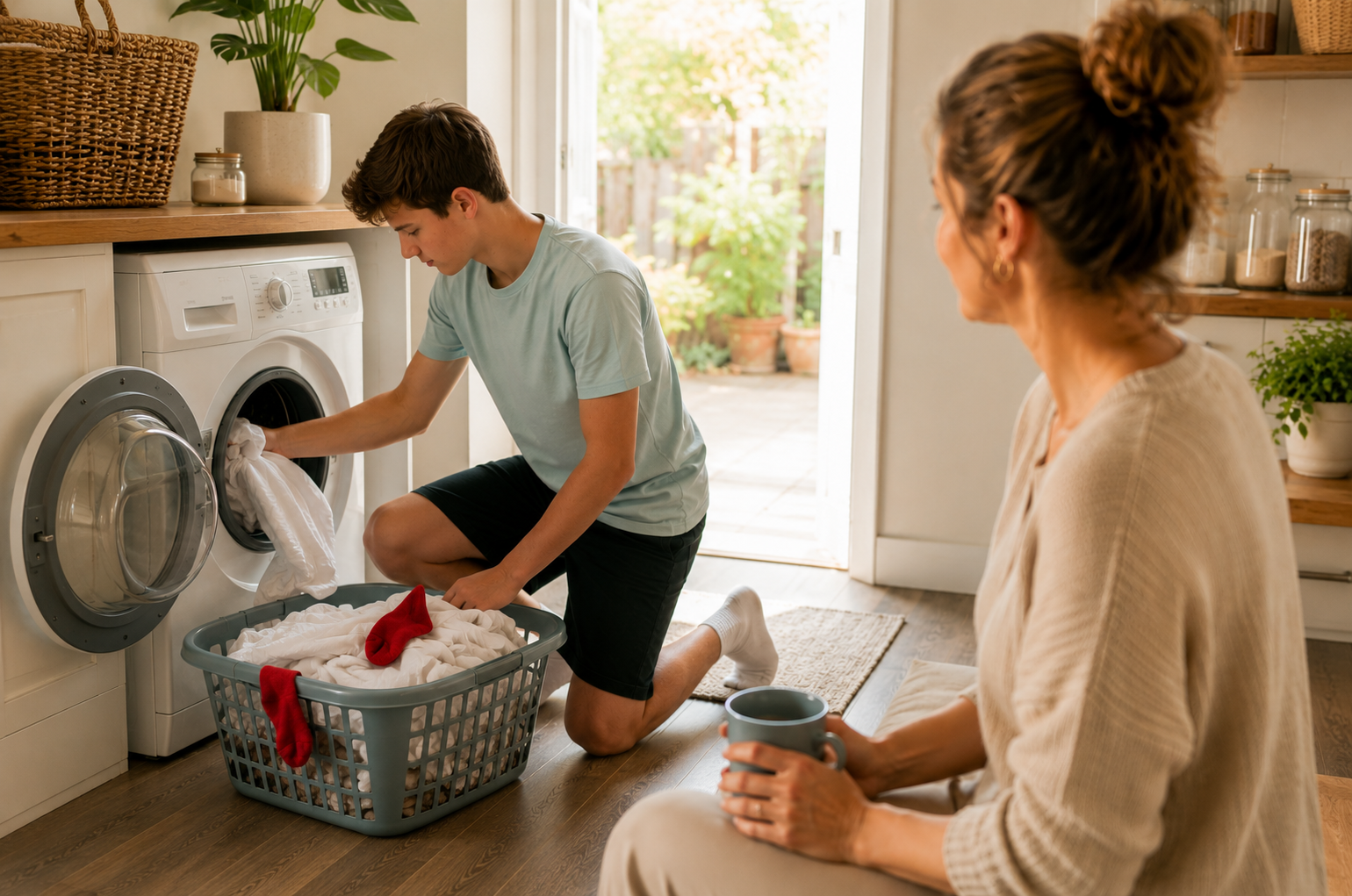
Someone forgets something.
Leaves it too late.
Gets overwhelmed.
Doesn’t do it the way you would’ve done it.
And suddenly, you hear it.
That familiar internal voice:
“I should’ve seen this coming.”
“I should’ve stepped in earlier.”
“This is on me.”
Not because it actually is.
But because when you’ve spent years smoothing things over before they become problems…
you start feeling responsible for preventing discomfort altogether.
Especially for the people you love.
So when things feel hard for them?
It doesn’t just feel inconvenient.
It feels like you’ve dropped the ball somehow.
And that’s the moment most mums step back in.
Not because their partner or kids aren’t capable.
But because guilt pulls them straight back into over-functioning.
Back into:
- reminding
- anticipating
- fixing
- managing
- mentally carrying it all again
Not just doing the tasks…
But quietly stepping back into the Household Google role all over again.
And the tricky part is… stepping back in usually does make things feel better in the short term.
The problem gets solved faster.
The tension disappears.
Things feel calm again.
But every time you rescue the moment too quickly…
You also remove the opportunity for someone else to:
- think
- adjust
- problem-solve
- remember
- or build capability for next time
Which means the pattern never really changes.
With you still holding it all together in the background.
So if this is the point where you usually step back in…
Try noticing the moment before you act.
Not to ignore your family.
Not to leave everyone struggling.
But to ask yourself:
“Am I helping here… or am I preventing someone else from learning how to manage this?”
Because sometimes the real shift happens in the few extra moments you don’t rush in to rescue.
What Happens When You Don’t Step Back In
This is the part that can feel the messiest.
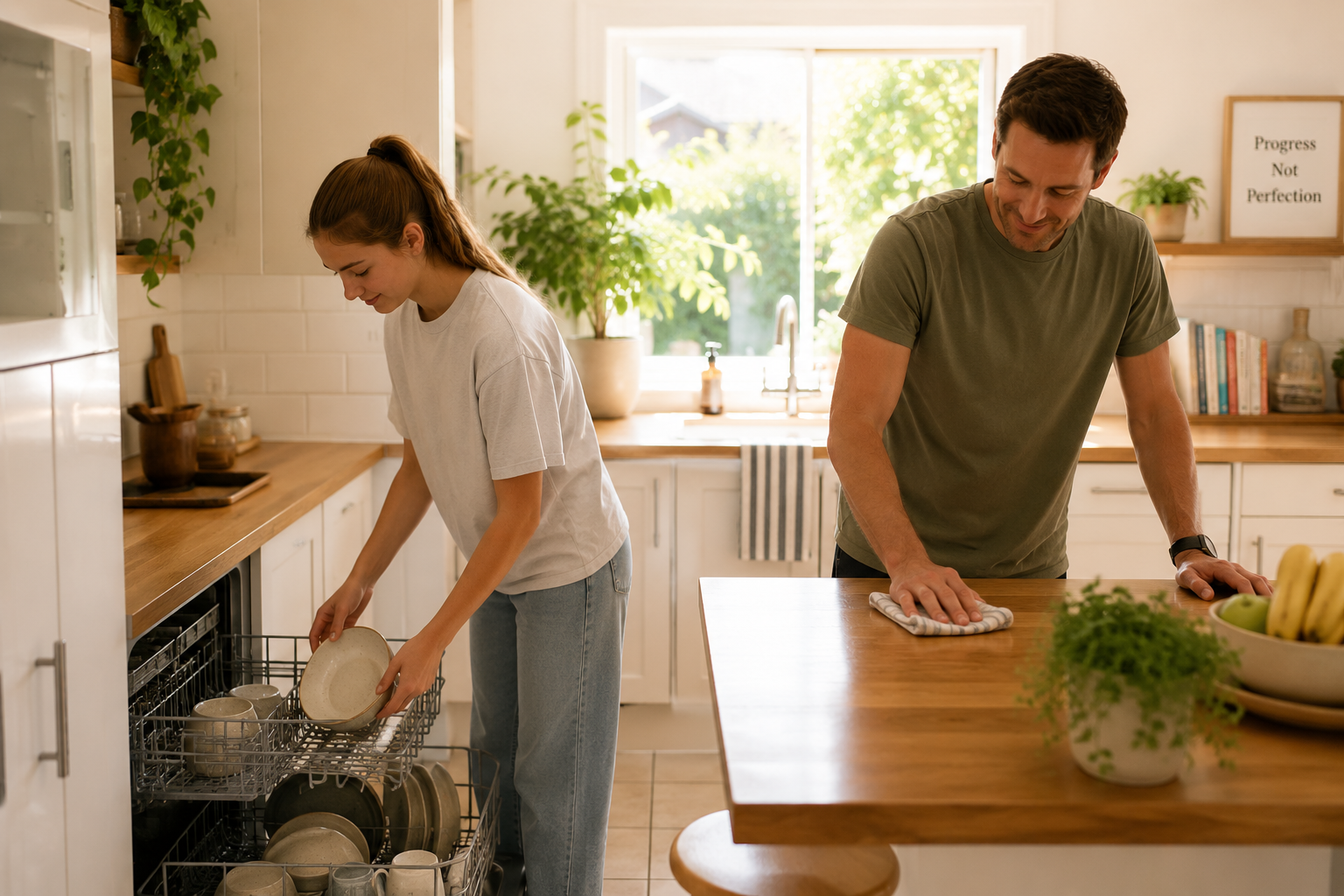
Because when you stop rushing in to fix everything straight away…
Things might wobble for a bit.
Something gets forgotten.
Done differently.
Left until later than you would’ve liked.
And honestly?
Sometimes it is a bit clunky at first.
But that doesn’t mean it isn’t working.
It means people are adjusting to carrying something they haven’t had to fully carry before.
And that adjustment process matters.
Because when you don’t immediately rescue the moment…
Something else has space to happen.
People start:
- thinking ahead
- noticing things for themselves
- problem-solving
- adapting
- figuring out what works
Not perfectly.
Not instantly.
But without everything relying on you first.
And yes, that can feel uncomfortable to watch.
Especially when you already know the faster, easier, more efficient way to solve the problem.
But shared responsibility was never going to grow from everyone waiting for you to manage the process.
It grows when other people get the space to participate fully in it.
Even if they do it differently.
Even if it takes longer.
Even if the towels are folded in ways that make your eye twitch a little.
Because the goal isn’t a magazine-perfect home.
It’s a household where:
- responsibility is shared
- contribution becomes normal
- and everything doesn’t depend on one person quietly holding it all together in the background
And slowly, over time…
Something starts shifting.
Not just in your family.
But in you.
You stop feeling like you have to anticipate every problem before it happens.
You stop carrying the whole mental checklist alone.
You start trusting that other people can step up and manage it too.
Not because they magically know how to do everything overnight.
But because there’s finally room for them to practise being capable.
Rethinking What Makes a “Good Mum”
This is the part that can be hardest to see clearly.
Because underneath all the doing…
Is the belief that managing it all is what make you a “good mum.”
Not just helping.
Not just contributing.
Managing.
Keeping track.
Staying on top of things.
Making sure nothing falls through the cracks.
Quietly carrying the responsibility for how life feels for everyone else in the house.
That’s the part many mums have been conditioned into for years.
And it runs deep.
So deep that stepping back can feel uncomfortable even when everyone else is capable.
Because it’s not just the jobs that are hard to let go of.
It’s the responsibility.
The vigilance.
The feeling that if something gets missed, messy, forgotten, or difficult…
You should’ve prevented it somehow.
So when things feel messy…
Or someone struggles…
Or your family has to figure something out without you stepping straight in…
It can feel wrong somehow.
Like you’re not doing your job properly.
But what if some of that messiness isn’t failure?
What if it’s growth?
Because learning responsibility doesn’t happen when someone else constantly smooths the path.
It happens when people get the chance to:
- forget things
- solve problems
- experience consequences
- adjust
- try again
- and slowly build trust in their own capability
And honestly?
That process can feel uncomfortable to watch sometimes.
Especially when you could make everything easier.
Faster.
Smoother.
But stepping in to always rescue the moment comes with a cost too.
Because if kids grow up never needing to manage life beyond being reminded and directed…
How do they learn to carry their share of a household later?
How do they learn to notice what needs doing?
To contribute without waiting to be asked?
To understand that running a household is a shared responsibility, not something that quietly defaults to Mum?
Because kids don’t just learn from what we tell them.
They learn from what they see lived out around them every day.
What gets noticed.
Who carries the responsibility.
Who steps in automatically.
Who is expected to manage it all in the background.
And those patterns don’t just shape childhood.
They shape the adults they become, and the relationships and households they create later too.
Similarly, these patterns shape your current household.
What everybody quietly expects from one another.
So maybe being a “good mum” isn’t about preventing every wobble.
Maybe it’s about creating a home where everyone gets the chance to become capable.
Including you.
Because you deserve more than being the default manager of everybody else’s life.
You deserve support.
Contribution.
Breathing room.
And a household that can function without everything depending on you carrying the whole Motherload alone.
What this really comes down to isn’t whether your family is capable.
It’s whether you’ve ever truly had permission to stop carrying the responsibility for everyone else’s comfort, remembering, and day-to-day functioning all on your own.
For a lot of mums, shared responsibility doesn’t fail because nobody else can do it.
It breaks down in the moments where guilt, conditioning, and the urge to make things easier pulls you back into managing everything again.
And that’s why this shift takes more than chore charts…
or asking for more help.
It takes:
- awareness
- space to do things differently
- and support while you unlearn patterns that may have been sitting quietly underneath your household for years
Not perfectly.
Not overnight.
But one small moment at a time.
One pause.
One boundary.
One uncomfortable moment you don’t rush to rescue.
Because every time you create space for someone else to step up…
You create a little more breathing room for yourself.
And over time, that changes more than just the jobs getting done around the house.
It changes the way responsibility is carried.
The way your family functions.
The expectations everybody holds.
And the amount of space you finally get to have for yourself, your business, your relationships, and your life outside of simply managing everybody else’s.
That’s the shift we’re really building.

If this hit a little close to home…
Maybe you’re starting to realise that the hardest part isn’t getting your family to help more.
It’s untangling the patterns that keep pulling you back into managing everything again.
That’s exactly the kind of thing we can work through together in a 1:1 session.
No judgement.
No blame.
No creating another chore chart.
Just practical support to help you:
- spot the patterns keeping you stuck in Household Google mode
- create shared responsibility in ways that actually fit your family
- and stop carrying the mental and emotional load alone
Because this shift isn’t about perfection.
It’s about creating a home where responsibility doesn’t quietly default to you.
Let’s Untangle This Together
(You pick the time. I’ll bring the clarity.)